Recent Blogs
- What Is Chronic Venous Insufficiency and When Should You See a Vein Specialist?
- What Happens If You Leave Varicose Veins Untreated for Years?
- Jobs That Increase Your Risk For Varicose Vein
- Caring for Your Friends’ and Family’s Vein Health
- Is the Closurefast RFA Procedure A Safe Option For Treating Varicose Veins?
- 7 Effective Home Remedies for Managing Varicose Veins
- Top 7 Ways to Treat a Ruptured Varicose Vein Safely
- Is It Safe to Fly with Varicose Veins?
- Some best exercises to prevent varicose veins
- Do Varicose Veins Get Worse Without Treatment?
Published on: 12-Oct-2026
Last updated: 12-Oct-2026
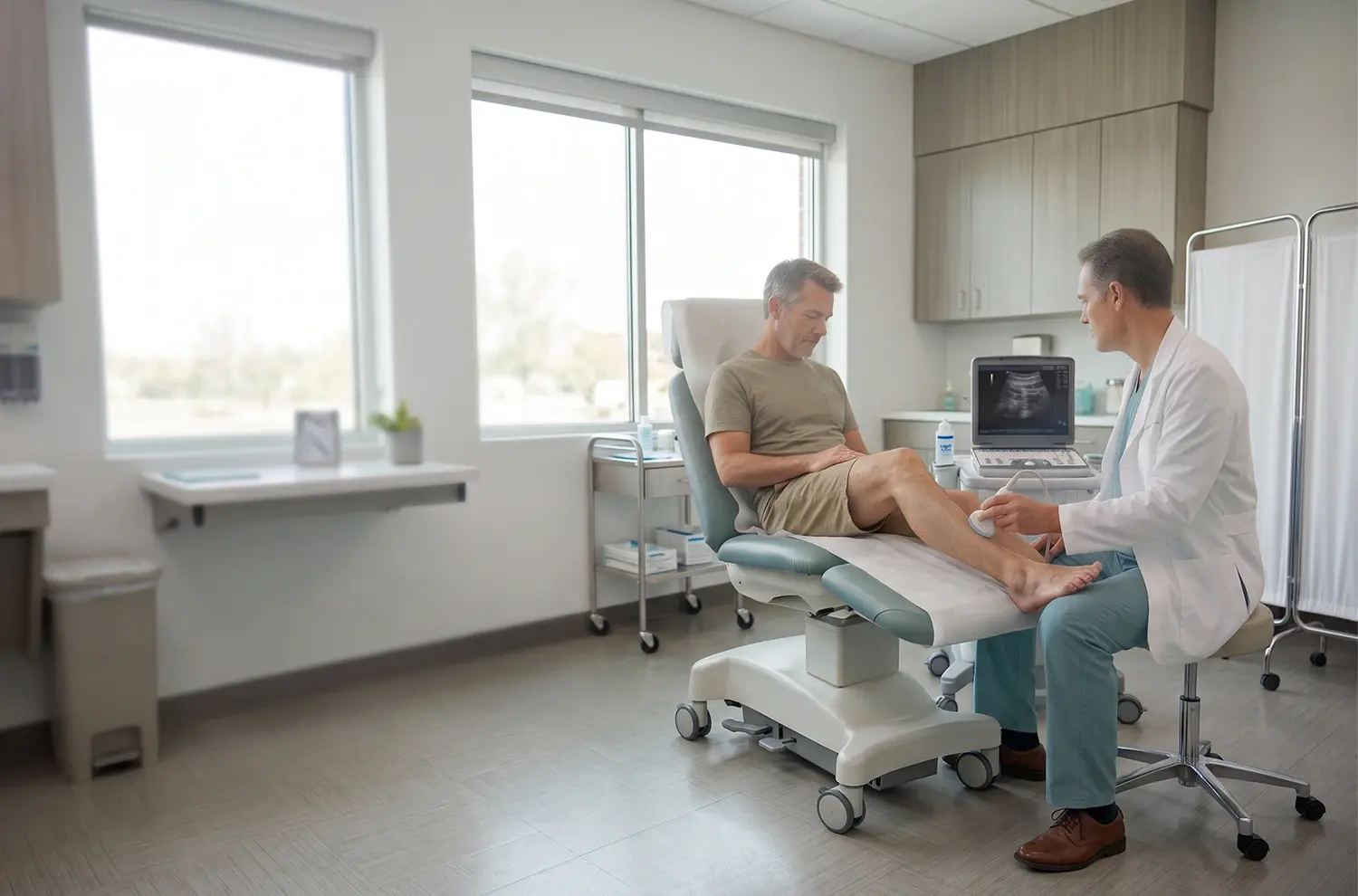
VenaSeal is a safe, FDA-approved treatment for varicose veins that seals the diseased vein with a small amount of medical adhesive instead of heat. Among patients followed for five years in the VeClose study, 94.6% of treated veins stayed closed.
The most common side effect is a phlebitis-like reaction: redness, itching or tenderness along the treated vein that usually settles within about two weeks. Serious complications are rare.
Table of Contents
- What Is VenaSeal and How Does Vein Glue Work?
- Is VenaSeal Safe? What the Research Shows
- What Are the Side Effects of VenaSeal?
- Does the Glue Stay in Your Body?
- What Is Recovery Like After Vein Glue Treatment?
- Who Should Not Get VenaSeal?
- VenaSeal vs Radiofrequency Ablation
- Conclusion
- FAQs
What Is VenaSeal and How Does Vein Glue Work?
The VenaSeal closure system treats varicose veins caused by faulty valves in the saphenous veins of the leg. Instead of heat, it uses VenaSeal medical adhesive, a specially formulated cyanoacrylate, to close the vein from the inside.
Using ultrasound for guidance, the doctor places a thin catheter into the diseased vein and releases tiny amounts of adhesive along its length. Gentle pressure on the skin seals the vein shut. Blood then reroutes on its own to nearby healthy veins.
Because the vein glue procedure uses no heat, it changes the experience in a few practical ways:
- No tumescent anesthesia: Heat-based treatments need many numbing injections along the vein, while this procedure usually needs only one needle stick for the catheter.
- No risk of heat injury: There is no thermal energy near the skin or nearby nerves.
- Compression stockings are often skipped: Most patients avoid the weeks of stockings that heat-based treatments usually require.
Is VenaSeal Safe? What the Research Shows
The U.S. Food and Drug Administration approved the VenaSeal system in 2015. The main study behind that approval was VeClose, a randomized trial of 222 patients. It compared adhesive closure with radiofrequency ablation, a well-established heat-based treatment.
The long-term results are strong. Among patients who completed five years of follow-up, 94.6% of treated veins remained closed. Nine out of 10 patients said they would choose the procedure again and no deep vein thrombosis, pulmonary embolism or adhesive-related allergies were reported in that group.
That also means around 5% of veins reopened over five years. When this happens, the vein can usually be treated again with another minimally invasive option.
What Are the Side Effects of VenaSeal?
Common Side Effects
Most side effects are mild and temporary. The one patients notice most is a phlebitis-like reaction along the treated vein, which usually appears a few days to a week after treatment:
- Redness over the vein
- Itching
- Mild swelling or tenderness
Some patients also notice light bruising or soreness where the catheter was placed.
In VeClose, phlebitis occurred in 20% of adhesive patients and 14% of radiofrequency patients, a difference that was not statistically significant. A Korean study found the reaction in 23.5% of patients and all recovered fully within two weeks.
Researchers believe this reaction is a delayed immune response to the adhesive. Itching is the clue that sets it apart from ordinary phlebitis. Antihistamines or a short course of steroids usually calms it.
Rare Complications
- Allergic reaction to cyanoacrylate: In one study of 286 patients, 6.3% had a hypersensitivity reaction. Most were mild and only one patient needed the treated vein removed. The manufacturer reports reactions that severe in fewer than 1 in 10,000 cases.
- Prolonged reaction: A few patients need several weeks of steroids and antihistamines before symptoms clear.
- Deep vein thrombosis: Blood clots in the deep veins are rare after this treatment.
Call your vein specialist if redness or itching keeps spreading, if hives appear or if one calf becomes swollen and painful. Chest pain or sudden shortness of breath needs emergency care right away.
Does the Glue Stay in Your Body?
The adhesive is a permanent implant that hardens in place inside the sealed vein. Over the following months, the closed vein shrinks and your body gradually turns it into scar tissue.
This is why your doctor asks about allergies before treatment. Unlike a cream or a pill, the adhesive cannot simply wear off if your body reacts to it.
What Is Recovery Like After Vein Glue Treatment?
The procedure is done in the office, usually in under an hour. Most people walk out right after and return to normal daily activities within a day or two.
A few simple steps help keep recovery smooth:
- Walk regularly: Walking supports healthy circulation in the legs.
- Report itching or redness early: An antihistamine started early can keep a phlebitis-like reaction mild.
- Keep your follow-up visit: An ultrasound check confirms the vein is closed and catches any problem early.
Who Should Not Get VenaSeal?
The clearest reason to avoid this treatment is a known cyanoacrylate allergy. The adhesive belongs to the same glue family as surgical skin glue and some nail and eyelash adhesives, so mention any reaction you have had to those products.
Your vein specialist will also review your ultrasound results, vein size and medical history before recommending adhesive closure.
VenaSeal vs Radiofrequency Ablation
The closest alternative is ClosureFast radiofrequency ablation, which closes the same type of vein with controlled heat. Both have strong long-term results, so the choice often comes down to comfort and recovery.
| Factor | Adhesive closure | ClosureFast RFA |
|---|---|---|
| How the vein is closed | Cyanoacrylate adhesive | Radiofrequency heat |
| Tumescent anesthesia | Not needed | Needed |
| Compression stockings after | Often not needed | Usually required |
| Phlebitis in VeClose trial | 20% | 14% |
Adhesive closure often suits people who dislike needles, cannot tolerate compression stockings or need to get back to work quickly. Radiofrequency ablation is the better choice for anyone with a cyanoacrylate allergy.
Conclusion
VenaSeal has more than a decade of research behind it and the results show a treatment that is effective and well tolerated. A mild phlebitis-like reaction is the side effect to expect and serious complications are rare. People with a known cyanoacrylate allergy are the main group who should choose another option.
Comprehensive Vein Care in Springfield, Ohio offers adhesive closure as one of four minimally invasive treatments, alongside ClosureFast, Varithena and sclerotherapy. If vein glue isn't right for you, another option can be done under the same roof.
If aching, swelling or bulging veins are slowing you down, schedule a free consultation to find out whether vein glue is the right fit for you.
FAQs
1. Is VenaSeal safe?
Yes, it is FDA-approved and backed by more than five years of study data showing high closure rates and rare serious complications.
2. Does the vein glue stay in your body forever?
Yes, the adhesive is a permanent implant that stays in the sealed vein, which your body gradually turns into scar tissue.
3. Can you be allergic to VenaSeal medical adhesive?
Yes, though severe reactions are rare, so anyone with a known cyanoacrylate allergy should choose a heat-based treatment instead.
4. Does the vein glue procedure hurt?
Most patients feel only a small needle stick, since the procedure needs no tumescent anesthesia.
5. Do I need compression stockings after VenaSeal?
Most patients don't, although your doctor may still recommend them based on your veins and symptoms.