Recent Blogs
- The Role of Family History in Vein Disease
- Sclerotherapy An Effective Treatment for Varicose and Spider Veins
- Are Your Shoes Causing Varicose Veins?
- What to Expect During Your First Sclerotherapy Session
- 8 Steps to Prep For Your First Vein Appointment
- Free Health Screenings Are Quick and Simple
- Stretch Marks or Varicose Veins: How to Differentiate?
- Some best exercises to prevent varicose veins
- 11 Myths About Vein Treatments You Need to Know
- Top 10 Varicose Vein Myths-Busted!
Published on: 24-Nov-2026
Last updated: 24-Nov-2026
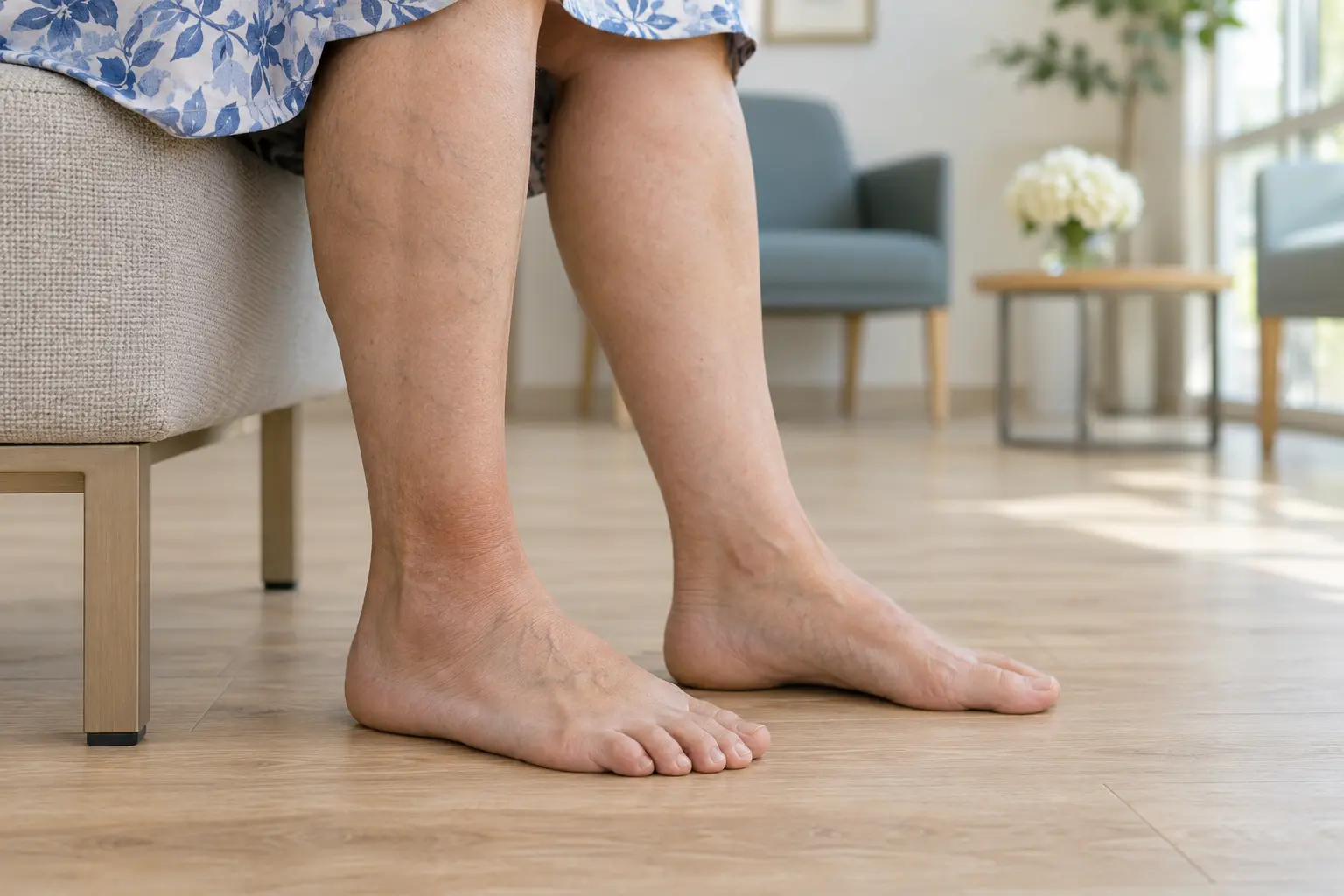
Lipodermatosclerosis is a condition where the skin and fat above your ankles slowly turn hard, tight, and discolored.
Many people first notice a brownish patch on the inner ankle, or skin that feels firm, almost woody, when pressed. It is easy to blame dry skin or age, but hard skin around ankles is usually a sign that your leg veins are not moving blood back to your heart properly.
Table of Contents
- Lipodermatosclerosis: Symptoms, Causes, and Treatment Options at a Glance
- What Is Lipodermatosclerosis?
- Types of Lipodermatosclerosis
- Lipodermatosclerosis Symptoms to Watch For
- Lipodermatosclerosis Causes and Risk Factors
- How Is Lipodermatosclerosis Diagnosed?
- How Is Lipodermatosclerosis Treated?
- What to Expect
- Can You Prevent Lipodermatosclerosis?
- When to See a Doctor (and When to Worry)
- Frequently Asked Questions
- Get the Root Cause Checked in Springfield
Lipodermatosclerosis: Symptoms, Causes, and Treatment Options at a Glance
- What it is: Inflammation of the skin and underlying fat in the lower legs.
- Main cause: Long-term high pressure in the leg veins from venous insufficiency.
- Key signs: Lower-leg skin thickening, skin discoloration, ankle swelling, and pain.
- Main treatments: Compression therapy, leg elevation, regular walking, and treating the faulty veins.
- Biggest risk if ignored: Venous leg ulcers that heal slowly.
What Is Lipodermatosclerosis?
Your leg veins have small one-way valves that keep blood flowing upward. When those valves weaken, blood pools in the lower legs. This is called chronic venous insufficiency (CVI).
The pooled blood raises vein pressure. Over time, fluid and blood cells leak into nearby tissue and trigger inflammation.
The fat under the skin gradually scars and hardens, and the skin above it thickens and darkens. Doctors see this as one of the clearest chronic venous insufficiency skin changes.
Types of Lipodermatosclerosis
Acute Lipodermatosclerosis
This phase comes on suddenly. The inner lower leg turns red or purplish, feels warm, and is often very tender to touch.
Because it looks like a skin infection, it is often mistaken for cellulitis and treated with antibiotics that do not help.
Chronic Lipodermatosclerosis
This phase develops over time, sometimes after an acute flare and sometimes without one. The skin becomes firm, tight, shiny, and brown.
As the tissue scars, the leg narrows just above the ankle while the calf stays swollen. Doctors describe this as an "inverted champagne bottle" shape.
Lipodermatosclerosis Symptoms to Watch For
Lipodermatosclerosis symptoms usually start on the inner side of the lower leg and can affect one or both legs:
- Hard, thick skin that does not pinch up easily
- Red, purple, or brown skin discoloration
- Ankle swelling that is worse by evening
- Aching, burning, or tender skin
- Varicose veins or visible veins nearby
- A narrowed lower leg with a swollen calf
Lipodermatosclerosis Causes and Risk Factors
Most lipodermatosclerosis causes trace back to venous insufficiency. Anything that strains your leg veins raises your risk:
- Varicose veins or a family history of vein disease
- A past deep vein thrombosis (DVT) that damaged the vein valves
- Excess body weight, which adds pressure on leg veins
- Long hours of standing or sitting at work
- Limited ankle movement or low activity, since calf muscles help pump blood upward
- Smoking
- Age, as it is more common in middle-aged and older adults, especially women
How Is Lipodermatosclerosis Diagnosed?
Physical Exam and History
Most cases are diagnosed by examining the skin and asking about your vein and clotting history.
Venous Duplex Ultrasound
This is the most useful test. A painless venous duplex ultrasound shows how blood moves through your leg veins, which valves are leaking, and whether old clots are present.
Biopsy (Rarely)
A skin biopsy is usually avoided. Skin affected by lipodermatosclerosis heals poorly, and a biopsy wound can turn into an ulcer.
How Is Lipodermatosclerosis Treated?
There is no single cure, but lipodermatosclerosis treatment can ease pain, reduce swelling, and stop the skin from getting worse.
Compression Therapy
Graduated compression stockings push fluid back toward the heart and are the foundation of care. If your skin is very tender during a flare, your doctor may start with lighter compression. Anyone with poor arterial circulation should be checked before using compression.
Leg Elevation and Movement
Raising your legs above heart level several times a day helps drain pooled blood. Walking and ankle exercises activate the calf muscle pump.
Medications
During painful flares, doctors may prescribe anti-inflammatory medicines or steroid creams.
Treating the Underlying Vein Problem
When ultrasound shows faulty veins, minimally invasive procedures such as radiofrequency ablation, medical adhesive closure, or foam sclerotherapy can close the damaged veins. Blood then reroutes through healthy ones, lowering the pressure that drives skin damage.
What to Expect
Your first visit usually involves a leg exam, questions about your symptoms, and an ultrasound to map the problem veins.
Most people start with compression and daily movement. If faulty veins are found, a vein procedure may follow.
With steady care, pain and swelling often ease. Older brown staining fades slowly, if at all, which is why starting early matters.
Can You Prevent Lipodermatosclerosis?
You cannot change your genes, but you can lower the strain on your veins:
- Get varicose veins and leg swelling checked early
- Stay active and take short walks during long workdays
- Keep a healthy weight and avoid smoking
When to See a Doctor (and When to Worry)
Book a vein evaluation if you notice new hardening, darkening, or swelling around your ankles.
Seek prompt care if you have:
- An open sore or wound on your lower leg
- Spreading redness, warmth, pus, or fever, which may signal infection
- Sudden swelling and pain in one leg, which could indicate a blood clot
Get the Root Cause Checked in Springfield
Creams calm the surface. Lasting relief comes from fixing the veins underneath.
At Comprehensive Vein Care in Springfield, our vein care team has been treating leg vein problems since 2014. We test your legs in-office and stay with you from your first visit to follow-up.
Treatment options include VenaSeal™, ClosureFast™, Varithena, and sclerotherapy. See real patient results for yourself.
Book your appointment before skin changes turn into an ulcer.
Frequently Asked Questions
Is lipodermatosclerosis serious?
It is not life-threatening, but without treatment it can lead to painful venous leg ulcers.
Can lipodermatosclerosis go away on its own?
Acute flares may settle, but the hardening rarely clears without treating the vein problem behind it.
What is the best treatment for lipodermatosclerosis?
Daily compression therapy combined with treating the faulty veins gives the most lasting relief.
Is walking good for lipodermatosclerosis?
Yes, walking strengthens the calf muscle pump that pushes blood out of your lower legs.
Is lipodermatosclerosis the same as lipedema?
No, lipedema is a fat disorder that usually spares the feet, while lipodermatosclerosis comes from vein pressure.